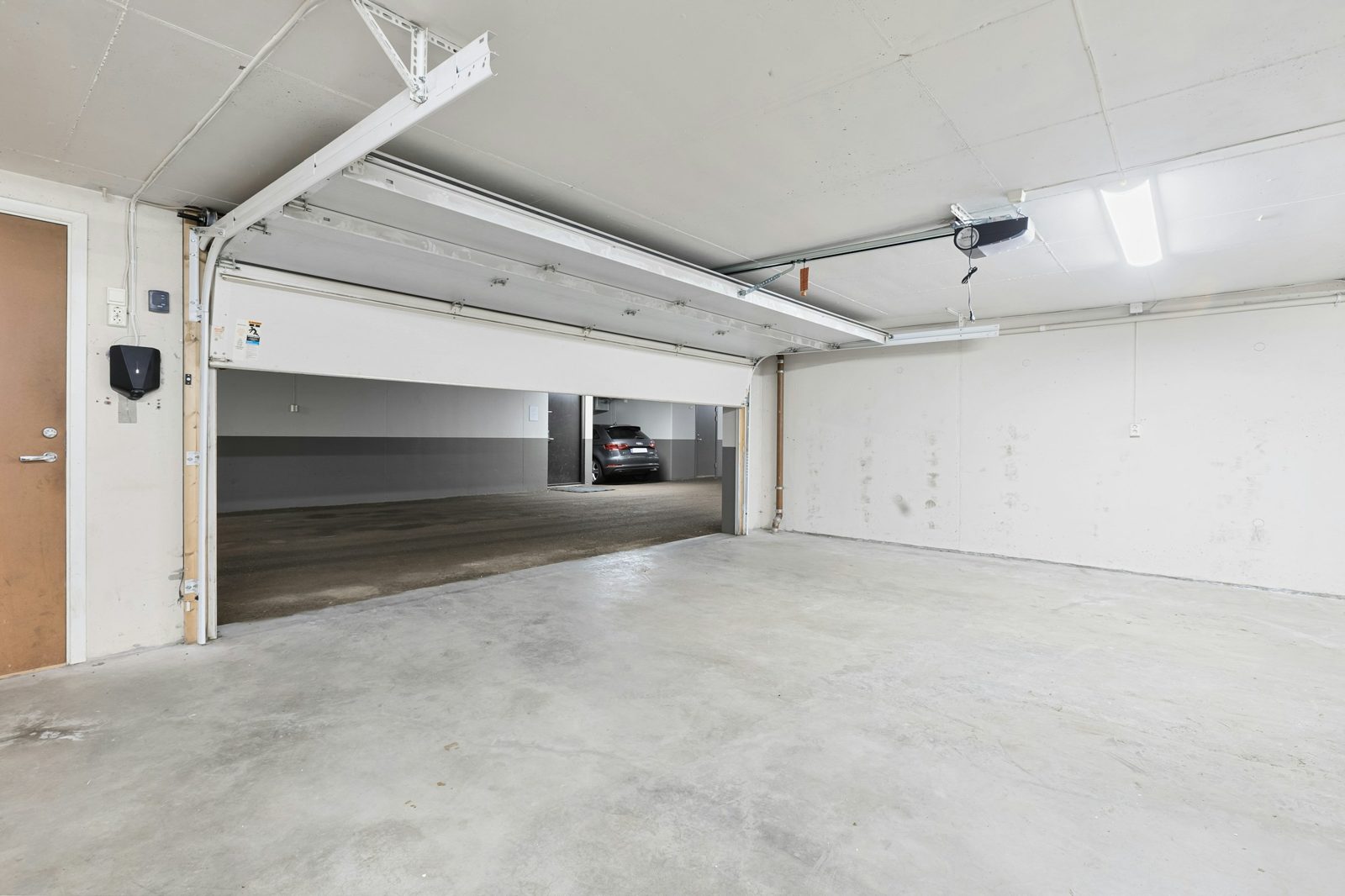
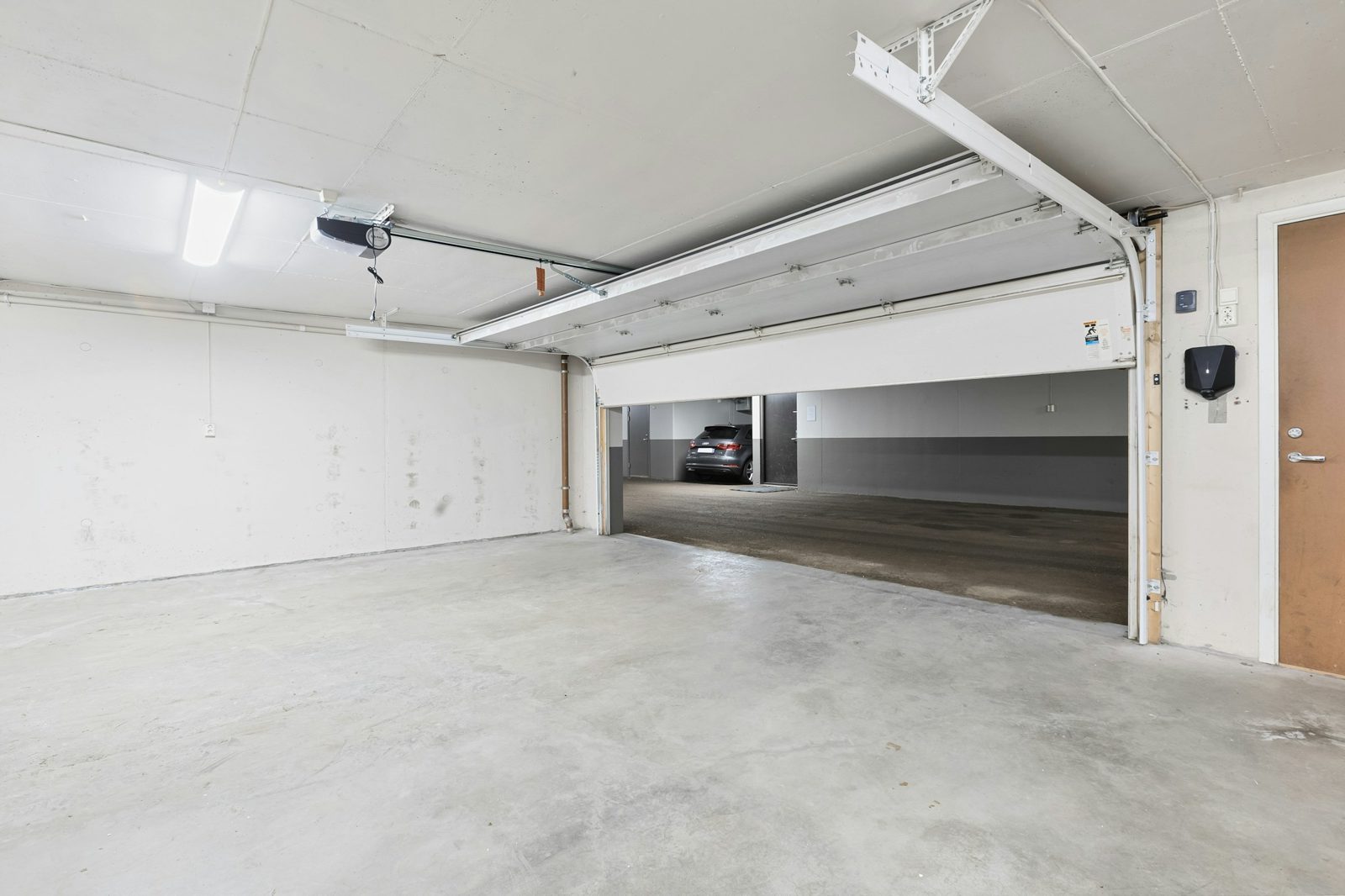

Two-car garage, full-flake system
The slab had oil spots at both bays and a hairline crack at the door. We ground it open, filled the crack, and ran a full-flake system with a sun-stable topcoat.
Our most-chosen garage floor — flake broadcast to refusal, sealed with a sun-stable topcoat.

A full-flake floor starts with a pigmented base coat rolled onto a ground slab. While it is wet, vinyl flake is broadcast by hand until the coat can hold no more — that is what full broadcast means. The excess is scraped back, the floor is vacuumed, and a clear topcoat seals it.
Flake does three jobs at once. It gives the floor its granite look and its color. It adds texture under tires and shoes. And it hides the small sins of an older slab — patch lines, stains, and hairline cracks disappear under a full broadcast where a solid color would show them.
In a two-car garage the system runs about $6.25 to $9.75 per square foot before slab work. Most of our Crystal River garages land between $2,750 and $4,300 for the floor itself, with repair and moisture work priced in writing first.
Flake blends are the showroom moment of the job. Grays and warm browns dominate Florida garages because they hide tire dust and dirt between cleanings. We bring physical samples to the estimate so you can choose in your own garage light — not from a photo on a screen.
The clear topcoat is the working layer. It locks the flake down, takes the tire heat, and holds color at the door line where the sun hits. Without it, flake is decoration. With a polyaspartic top, the floor is ready for cars the next day on most jobs.
We measure the floor, check the slab for cracks and old coatings, and test for moisture. In Citrus County the water table sits high, so the test comes first. You get a written price before any work starts.
We grind the whole slab with a diamond grinder to open the pores. Cracks and pits get filled and ground flush. You pick the finish from real samples, in your own light.
The base coat goes down, flake is broadcast by hand until the coat can hold no more, and a clear topcoat seals it. We tell you in writing when you can walk on it and when you can park.
We walk the floor with you, show you how to clean it, and leave the return-to-service times in writing. If a spot needs a touch, it gets done before we leave.


The slab had oil spots at both bays and a hairline crack at the door. We ground it open, filled the crack, and ran a full-flake system with a sun-stable topcoat.


One finish ties the three-car garage to the screened lanai out back. The slab tested damp near the door, so a moisture primer went down first.
A working garage that could not sit empty for days. The fast-cure system went down in one visit and the cars were back the next day, per the written schedule.
Tell us about the floor. We call back with a time to come look — the written price comes after the in-person look, before any work starts.
Rather talk? Call (352) 555-0162.
A two-car garage in our full-flake system runs about $2,750 to $4,300 in our calculator, before slab work. The written price after our visit is the number that counts — the calculator is a planning range.
A flat, dry slab coats fast. A slab with cracks, old paint, or a high moisture reading needs grinding, repair, or a moisture primer first. That work moves the price more than an extra hundred square feet.
With a polyaspartic topcoat, most garages are ready for cars the next day. A full epoxy build takes longer to reach full strength. Your schedule is written down at the estimate, before work starts.
Kit floors peel because the prep is thin — a quick etch over a sealed or dusty slab, with no moisture test. We grind to an open profile, test the slab, and repair it first. That is the whole difference.
Plain epoxy can amber at the garage door line. Our topcoat is UV-stable, so the first few feet inside the door hold their color. That matters most on doors that face the afternoon sun.
The garage has to be empty on install day. Most folks use the driveway and the lanai for a day, or borrow a neighbor's carport. Tell us at the estimate and we will plan the timing around it.
Pick your floor and its size. The range updates as you go.
Add-ons your floor may need
Every floor is different. Slab condition moves the final number more than size does.
These are planning ranges, not a quote — your final price is confirmed after an in-person look, before any work starts.